Bristol Harbourside Flat Prices What Recent Sales Really Tell You
HM Land Registry data shows flats across the wider Bristol harbourside area selling from 263,000 pounds to 748,000 pounds in a single week. Here is how to read those numbers.

Why sold prices beat asking prices every time
Asking prices are marketing. Sold prices are reality. When a seller lists a flat at four hundred and fifty thousand pounds and it completes at four hundred and ten thousand, only one of those numbers matters to you as a buyer trying to work out what to offer. HM Land Registry publishes every registered sale in England and Wales, and that is the data we are working from here.
The figures cover the whole City of Bristol local authority district, not a single street or postcode. That scope matters. It means the numbers reflect a genuine spread of flats across the wider Bristol harbourside area, from compact studios near the water to larger apartments further back. Keep that breadth in mind as you read.
The median and what it is actually telling you
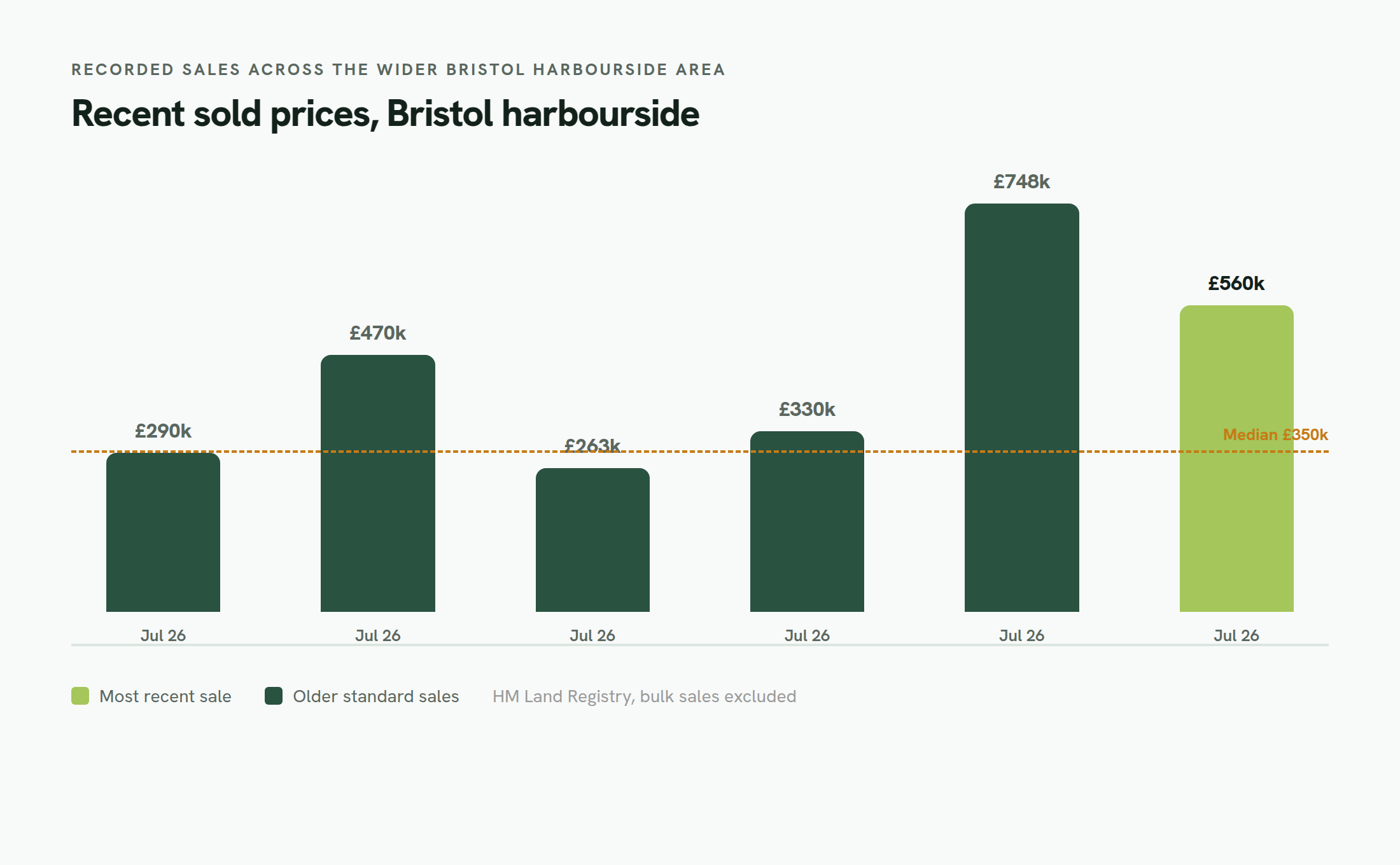
Across one hundred and eighty seven qualifying flat sales in the dataset, the median sold price is three hundred and fifty thousand pounds. That middle figure is useful as a rough orientation point. If someone quotes you a price wildly above or below it, you have a reason to ask questions.
But a median built from sales spread over several years can quietly mislead you. Markets move. A sale from three years ago is baked into that number alongside a sale from last month, and those two transactions may reflect very different conditions. The median is a starting point, not a verdict.
The most recent sale is your sharpest anchor
Here is the thing most buyers miss. The single most recent registered sale is often a better anchor for your negotiation than any multi year median, because it reflects what a real buyer and a real seller agreed on in current conditions.
The most recent sale in this dataset completed on the thirtieth of July twenty twenty six at five hundred and sixty thousand pounds. That is a live data point. It tells you that a buyer, with current mortgage rates and current market confidence, decided that price was fair for a flat in this area right now. That is genuinely useful information.
One sale is not a trend, of course. But it is fresher than a median that may contain sales from a very different interest rate environment.
Eight sales in four days and the range they reveal
Looking at the eight most recent registered sales, all completed between the twenty seventh and thirtieth of July twenty twenty six, you get a vivid picture of just how wide the market is across this area.
- 1Five hundred and sixty thousand pounds, thirtieth of July
- 2Seven hundred and forty eight thousand pounds, twenty ninth of July
- 3Three hundred and thirty thousand pounds, twenty ninth of July
- 4Two hundred and sixty three thousand pounds, twenty eighth of July
- 5Four hundred and seventy thousand pounds, twenty eighth of July
- 6Two hundred and ninety thousand pounds, twenty eighth of July
- 7Three hundred and sixty five thousand pounds, twenty seventh of July
- 8Five hundred and fifteen thousand pounds, twenty seventh of July
That is a spread of nearly half a million pounds between the cheapest and the most expensive in a single four day window. The two hundred and sixty three thousand pound sale and the seven hundred and forty eight thousand pound sale both happened on the same day. Same area, same market conditions, very different flats. Size, floor, finish, outlook and whether there is outdoor space all drive enormous variation. Never assume the median describes your specific flat.
What gets excluded and why it matters
Twelve sales were stripped out of this dataset before any analysis was done. These are what the Land Registry classifies as non market or category B transactions. Think bulk portfolio purchases, sales between family members at below market value, repossessions and similar. Including them would skew the numbers and give you a false read on what a normal buyer pays.
The fact that twelve were excluded and one hundred and eighty seven remained is worth knowing. It means the median of three hundred and fifty thousand pounds is based on arm's length open market transactions, which is exactly what your purchase will be. The sample is clean.
How to use this data when you are making an offer
Start with the most recent comparable sale you can find, not the median. If the flat you want is similar in size and spec to the five hundred and sixty thousand pound sale from the thirtieth of July, that is your anchor. If it is more modest, the two hundred and ninety thousand or three hundred and thirty thousand pound sales from the same week give you a realistic floor to argue from.
Ask your solicitor or conveyancer to pull the full title register for any flat you are serious about. That will show you what the current owner paid and when. If they bought at peak prices in twenty twenty two and the market has shifted, that context is gold in a negotiation.
The median of three hundred and fifty thousand pounds across one hundred and eighty seven sales tells you this is not a cheap market. But the range from two hundred and sixty three thousand to seven hundred and forty eight thousand pounds in one week tells you there is genuine opportunity at the lower end if you are patient and specific about what you need.
The honest bottom line for a first time buyer
Bristol harbourside is a real market with real variation. The data here is from HM Land Registry, it excludes bulk and non market sales, and the most recent registered transaction completed at five hundred and sixty thousand pounds on the thirtieth of July twenty twenty six.
Do not let anyone sell you a flat based on a vague area average. Push for specific comparables, recent ones, from the last three to six months if you can get them. The numbers in this piece are your starting point. Use them to ask better questions, not to draw firm conclusions about one specific property.
Common questions
- What is the median sold price for flats across the wider Bristol harbourside area?
- Based on one hundred and eighty seven qualifying sales in the HM Land Registry dataset, the median sold price is three hundred and fifty thousand pounds. Twelve non market transactions were excluded before that figure was calculated.
- What was the most recent flat sale registered in this area?
- The most recent registered sale completed on the thirtieth of July twenty twenty six at five hundred and sixty thousand pounds. Because it reflects current market conditions, it is often a more useful anchor than a multi year median when you are making an offer.
- Why do flat prices vary so much in the same area on the same day?
- Size, floor level, finish quality, outdoor space and outlook all create enormous differences in value. On the twenty eighth of July twenty twenty six alone, registered sales ranged from two hundred and sixty three thousand pounds to four hundred and seventy thousand pounds. The median cannot capture that variation, which is why you need specific comparables for the flat you are actually buying.
- Are bulk or portfolio purchases included in these figures?
- No. HM Land Registry category B transactions, which include bulk purchases, family transfers at below market value and repossessions, are excluded. The one hundred and eighty seven sales used here are all open market arm's length transactions, which makes the median a fair reflection of what normal buyers are actually paying.
Sources
Have a property in mind? Check it before you offer.
Paste the Rightmove or Zoopla link and Flatscope reads the lease, the real running costs and the sold-price record, every figure cited. Three free reports a month, no card. Your first run needs no signup.
From the buyer's guides
More insights
Flatscope is informational software, not regulated financial or legal advice. Figures are read from public records at the time of writing and can change. Confirm anything decision-critical with your solicitor or surveyor.